

Indigo | OCT 2025
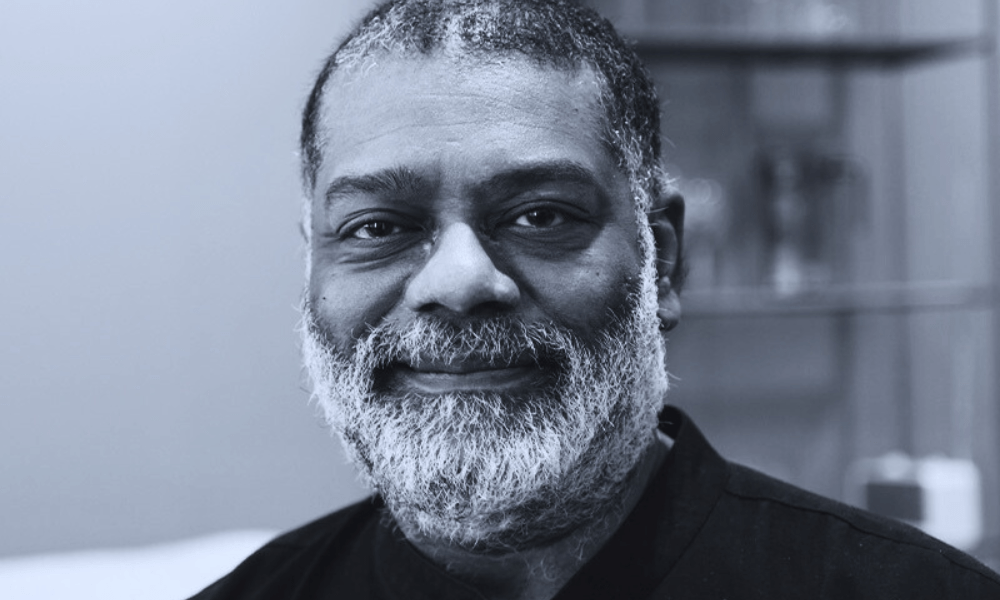
Baker Karim, director of The Dog
Baker Karim is a storyteller redefining African cinema. As the writer, director, and producer of The Dog, he brings a bold, character-driven vision to East African filmmaking, one that moves beyond social themes to explore the depth of human emotion and connection.
In this Q&A, he talks about the inspiration behind The Dog, the experience of filming in Mombasa, and his mission to challenge how African stories are told and perceived around the world.
Where did this story originate from?
This film came about from a long-standing desire I’ve had to make a film in Africa. I was born in Kampala and have always wanted to return to the region to tell a story from there. While traveling through East Africa, I visited Mombasa and was immediately drawn to it, a beautiful city with cinematic potential that hadn’t been overused on screen. It felt fresh, raw, and full of life, the perfect setting for something new and exciting. I’d also heard about Kenya’s vibrant film industry and wanted to see if it would be possible to produce a film there. After meeting with local producers, directors, actors, and writers, it became clear that it absolutely was. That’s how The Dog began. I didn’t want to make another social-issue film about Africa’s struggles. Instead, I wanted to tell a human story, one rooted in character, emotion, and personal conflict. The Dog unfolds in an underworld setting, following a drug dealer who’s tasked with protecting a beautiful prostitute, and through their journey, explores themes of loyalty, survival, and redemption.During the shoot, what was the most difficult creative choice you had to make, and how did it shape the film?
One of the biggest artistic challenges was whether or not to shoot this in Swahili. That was a big question. I felt that if it took place in Mombasa, in Kenya, we should be sipped in. We should be hearing Sheng, the real dialect and the real language, and not have characters speak in English. But that also meant that our actor who doesn’t speak Swahili had to learn. Also meant there would be a certain amount of a threshold in regard to our audiences in the West. Would they watch? Would they buy a film shot entirely in Swahili? That’s one of the biggest artistic challenges.Why did you choose Mombasa as the setting for the film?
Mombasa is a great city. It’s a great, plural city. There’s everything there. There’s rich and poor and high and low and different cultures, Muslim and Christian. That mix, I thought was exciting. Also, I thought it was exciting that I hadn’t seen a lot of films shot in Mombasa. So that milieu, that environment was ready, I felt, to be really explored cinematically. So that’s why we placed it in Mombasa. It’s a great city. It’s like a New York for us, but in Africa, this is what I felt. So it was just a beautiful city to shoot in. It had so much to film. Everything was cinematic in a way in Mombasa. It was just a pleasure to shoot there.What was the biggest challenge you faced in making The Dog?
One of the biggest challenges was figuring out how to portray an African world that wasn’t centered on social issues, but instead focused on the characters themselves — their relationships, emotions, and inner conflicts. In the West, audiences often expect African films to revolve around themes like corruption or poverty, but I didn’t want to make that kind of film. I wanted The Dog to be a true character study, and that’s exactly what we set out to achieve.The film premiered in Sweden (where you are based) a few weeks ago, what was that like?
The film has now been released in Sweden and has received strong critical acclaim. I believe there are two kinds of audiences.One expects African films to focus on social issues, stories about corruption, poverty, or disease.That perception still exists, and it may take time to change. But we need to help audiences move beyond that expectation. Then there’s another audience that takes the film for what it truly is, a character study, and sees it as a story about people, not specifically African people, but human beings. There’s still a long way to go in getting Western audiences to view African stories through that lens, but we’re heading in the right direction.